Randall Stratton Memorial Fund
Photos (left to right): Randall and longtime farm worker Tergo standing together in a Spannocchia vineyard in 1993; the new vineyard site in 2025, with vineyard posts in place and in the midst of soil preparation; Niccolò squatting down in the vineyard to inspect the soil.
2026 Project: AGROFORESTRY IN THE CAPANNONE GARDEN
This spring, we are proud to continue our effort of raising money for the Randall Stratton Memorial Fund (RMF) in order to support an environmental education project at Spannocchia. Now in its third cycle, the farm projects funded through the RMF change from year to year, but always reflect the shared goals of Randall and Friends of Spannocchia.
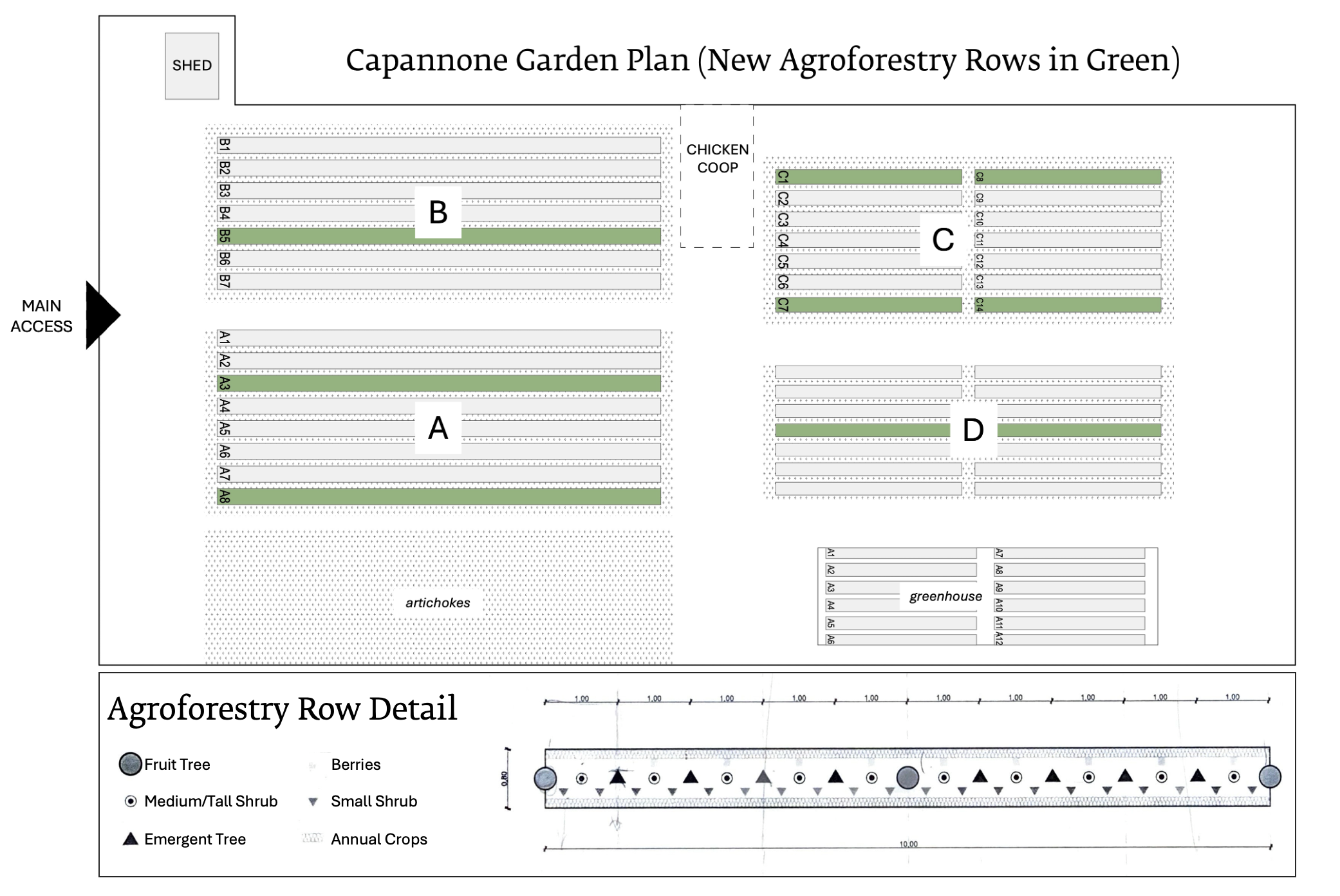
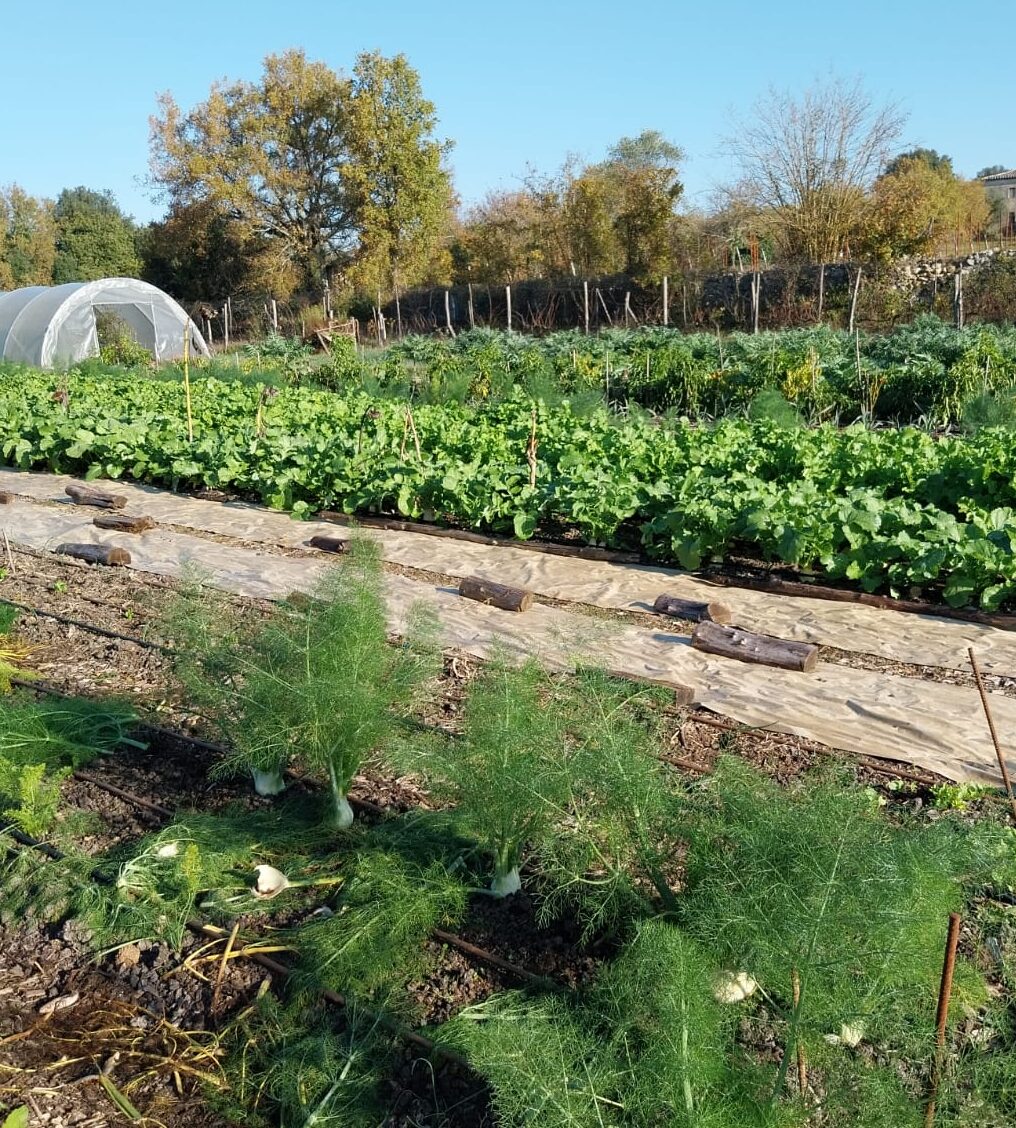
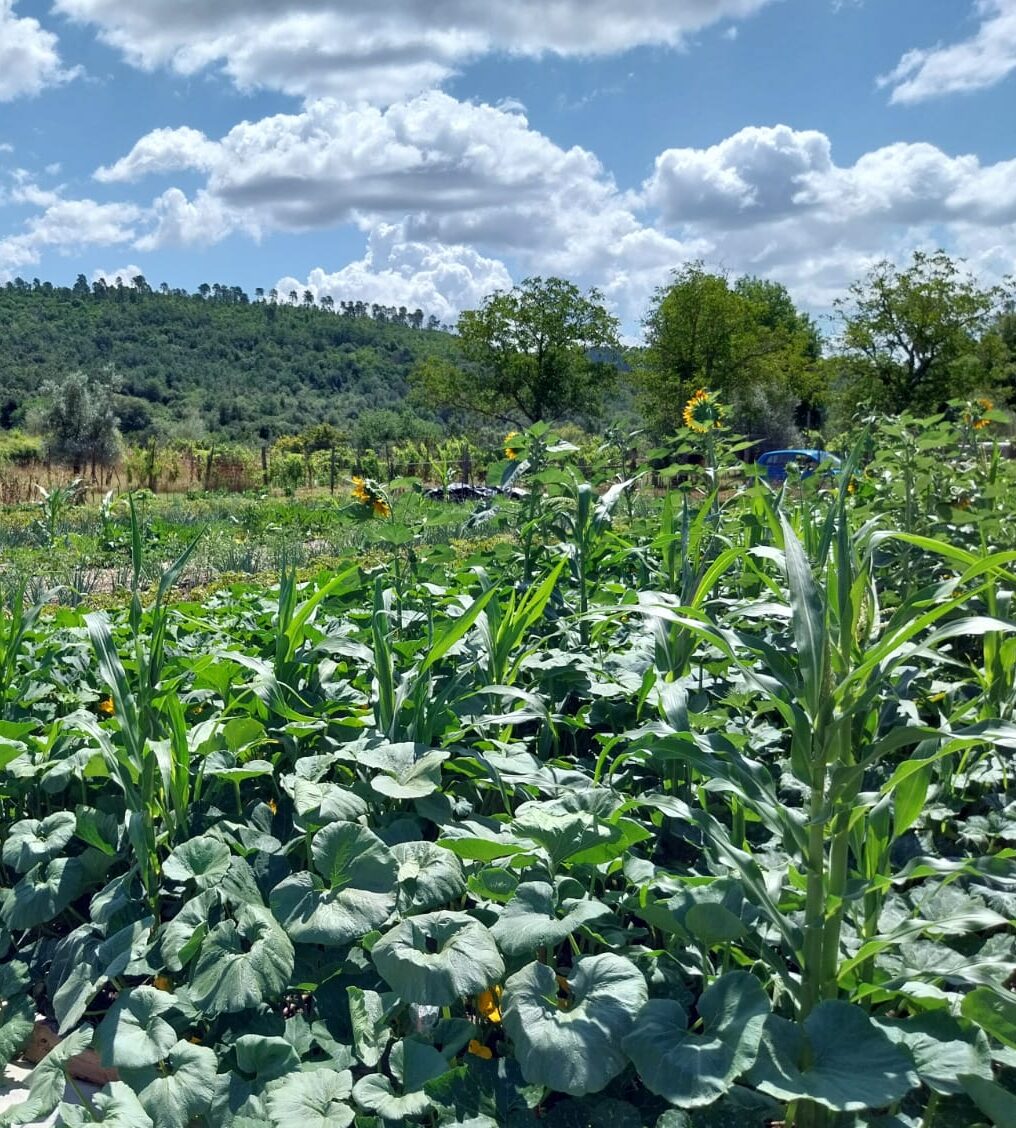
Our 2026 project will implement agroforestry practices in Spannocchia’s main vegetable garden, Capannone. Agroforestry integrates trees and shrubs among crops for a holistic system that aims to increase biodiversity, natural soil regeneration, and productivity; Yago, our vegetable farmer, has been studying this approach for years. With support from donations to the RMF, starting this fall we will introduce many trees, plants, and bushes into the garden, all serving different, specific functions: nitrogen fixers, soil cultivators, biomass plants, auxiliary plants for beneficial fauna, and more. Organized thoughtfully in varied rows among the vegetable crops, all of these plants will coexist and work together to create a more cooperative system.
Almost three years ago, the vision and hard work of Yago and the Spannocchia farm team—paired with funding from Friends of Spannocchia—enabled the transition to no-till regenerative agriculture in the garden. We’ve seen great results, but continue to fight deep soil compaction. With this project, many of the trees we plan to introduce have strong root systems to loosen the soil, restoring organic matter and life even to the deepest layers. And by planting at a very high density (up to 10 species per meter, including a mix of annuals, perennials, trees, and shrubs) we will maximize solar energy and transform it into organic carbon through all of the roots, increasing the fertility of the soil. Finally, systematic pruning of the larger plants will provide biomass to cover the soil, improving microbiology, helping to retain water, and keeping the system alive.
There are other, more straightforward benefits of a complex agroforestry system at Spannocchia as well. Choosing fruit trees for many of the trees in the garden will allow us to increase the amount and variety of foods grown for our community. In the long term we also expect vegetable production to increase thanks to a healthier and more fertile system. And, the trees will provide some shade for interns and farm staff during the hot summer months!
You may remember our letter last fall, which highlighted Spannocchia’s commitment to Tradition and Innovation, and introduced the concept of this new agroforestry plan. Our vision for Spannocchia is to be a leader of place-based education, specializing in sustainability, local food culture, and agricultural practices within natural landscapes. A unique project like this—through which we will serve as a model of agroforestry in Tuscany—provides ongoing educational opportunities for farm interns, program participants, fellow farmers, and Spannocchia guests alike. Please join us in honoring Randall’s memory by contributing to the Randall Stratton Memorial Fund for our 2026 farm project: Agroforestry in the Capannone garden. Thanks to your generosity, we look forward to bringing this project to life.
Note: To pay by check, please make checks payable to "Friends of Spannocchia" and add "Randall Memorial Fund" in the memo line. Mail to: PO Box 10531, Portland, ME 04104.
2026 Project: AGROFORESTRY IN THE CAPANNONE GARDEN
This spring, we are proud to continue our effort of raising money for the Randall Stratton Memorial Fund (RMF) in order to support an environmental education project at Spannocchia. Now in its third cycle, the farm projects funded through the RMF change from year to year, but always reflect the shared goals of Randall and Friends of Spannocchia.
Our 2026 project will implement agroforestry practices in Spannocchia’s main vegetable garden, Capannone. Agroforestry integrates trees and shrubs among crops for a holistic system that aims to increase biodiversity, natural soil regeneration, and productivity; Yago, our vegetable farmer, has been studying this approach for years. With support from donations to the RMF, starting this fall we will introduce many trees, plants, and bushes into the garden, all serving different, specific functions: nitrogen fixers, soil cultivators, biomass plants, auxiliary plants for beneficial fauna, and more. Organized thoughtfully in varied rows among the vegetable crops, all of these plants will coexist and work together to create a more cooperative system.
Almost three years ago, the vision and hard work of Yago and the Spannocchia farm team—paired with funding from Friends of Spannocchia—enabled the transition to no-till regenerative agriculture in the garden. We’ve seen great results, but continue to fight deep soil compaction. With this project, many of the trees we plan to introduce have strong root systems to loosen the soil, restoring organic matter and life even to the deepest layers. And by planting at a very high density (up to 10 species per meter, including a mix of annuals, perennials, trees, and shrubs) we will maximize solar energy and transform it into organic carbon through all of the roots, increasing the fertility of the soil. Finally, systematic pruning of the larger plants will provide biomass to cover the soil, improving microbiology, helping to retain water, and keeping the system alive.
There are other, more straightforward benefits of a complex agroforestry system at Spannocchia as well. Choosing fruit trees for many of the trees in the garden will allow us to increase the amount and variety of foods grown for our community. In the long term we also expect vegetable production to increase thanks to a healthier and more fertile system. And, the trees will provide some shade for interns and farm staff during the hot summer months!
You may remember our letter last fall, which highlighted Spannocchia’s commitment to Tradition and Innovation, and introduced the concept of this new agroforestry plan. Our vision for Spannocchia is to be a leader of place-based education, specializing in sustainability, local food culture, and agricultural practices within natural landscapes. A unique project like this—through which we will serve as a model of agroforestry in Tuscany—provides ongoing educational opportunities for farm interns, program participants, fellow farmers, and Spannocchia guests alike. Please join us in honoring Randall’s memory by contributing to the Randall Stratton Memorial Fund for our 2026 farm project: Agroforestry in the Capannone garden. Thanks to your generosity, we look forward to bringing this project to life.
Note: To pay by check, please make checks payable to "Friends of Spannocchia" and add "Randall Memorial Fund" in the memo line. Mail to: PO Box 10531, Portland, ME 04104.